It began in a changing room, not a boardroom

Renu Ojha spent most of her working life as a journalist and communications professional. The Desi Curve did not start as a business plan. It started as a problem she could not stop noticing.

She was looking for clothes that would make her feel elegant and sure of herself, and kept finding that everything she loved had been cut for a different body. Where larger sizes existed, they were usually the same design scaled up — a silhouette that falls beautifully on a petite frame, simply made bigger. It rarely worked, and nobody seemed to think that was strange.

So we began with one plain conviction: a bigger size is not the same thing as a better design. Different bodies need different cuts, not more fabric. We design for women of different shapes, ages and lives, and we start from how a garment actually falls — not from a size chart.

Preserving heritage. Empowering women.
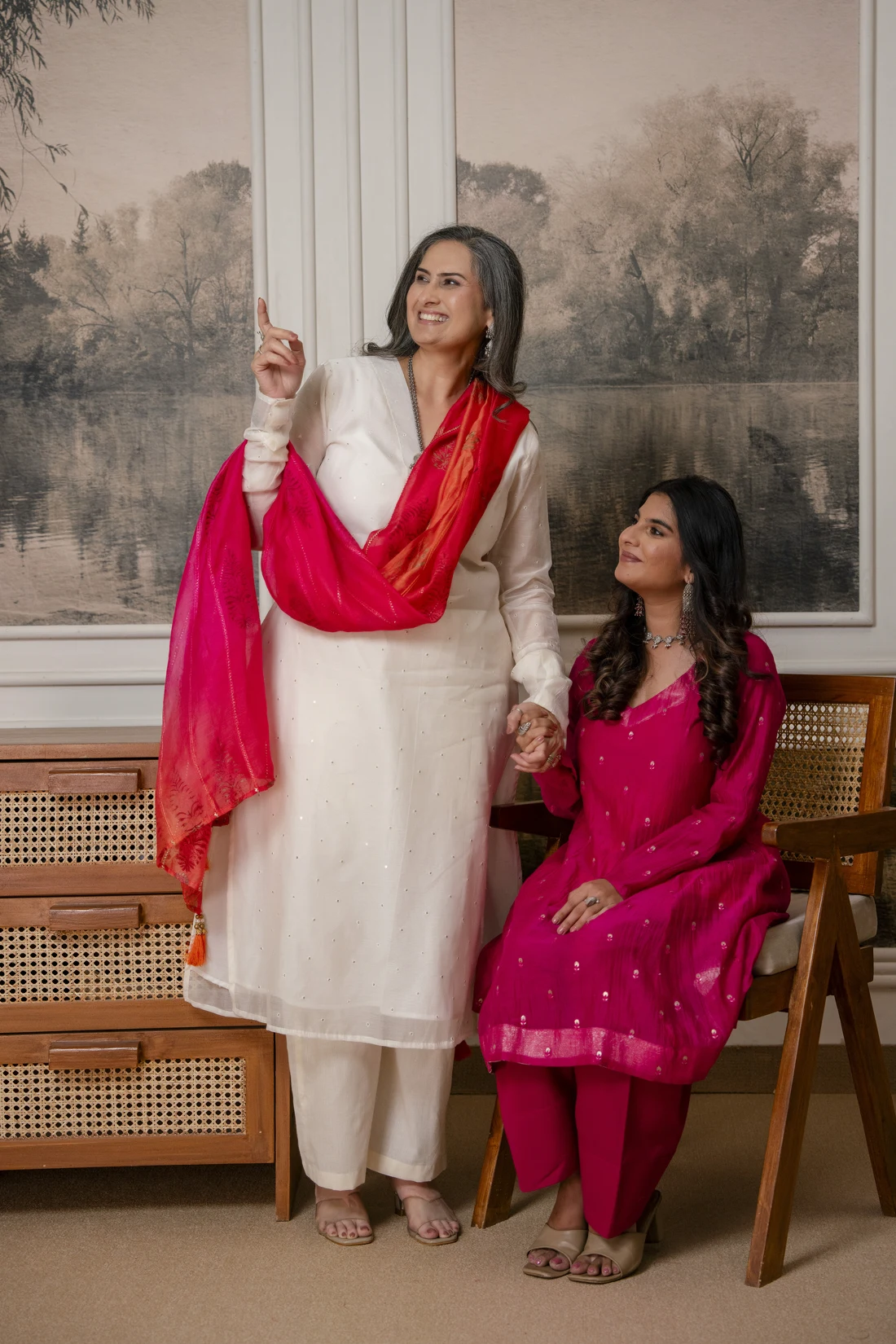
Two generations in The Desi Curve

Three Generations, One Wardrobe

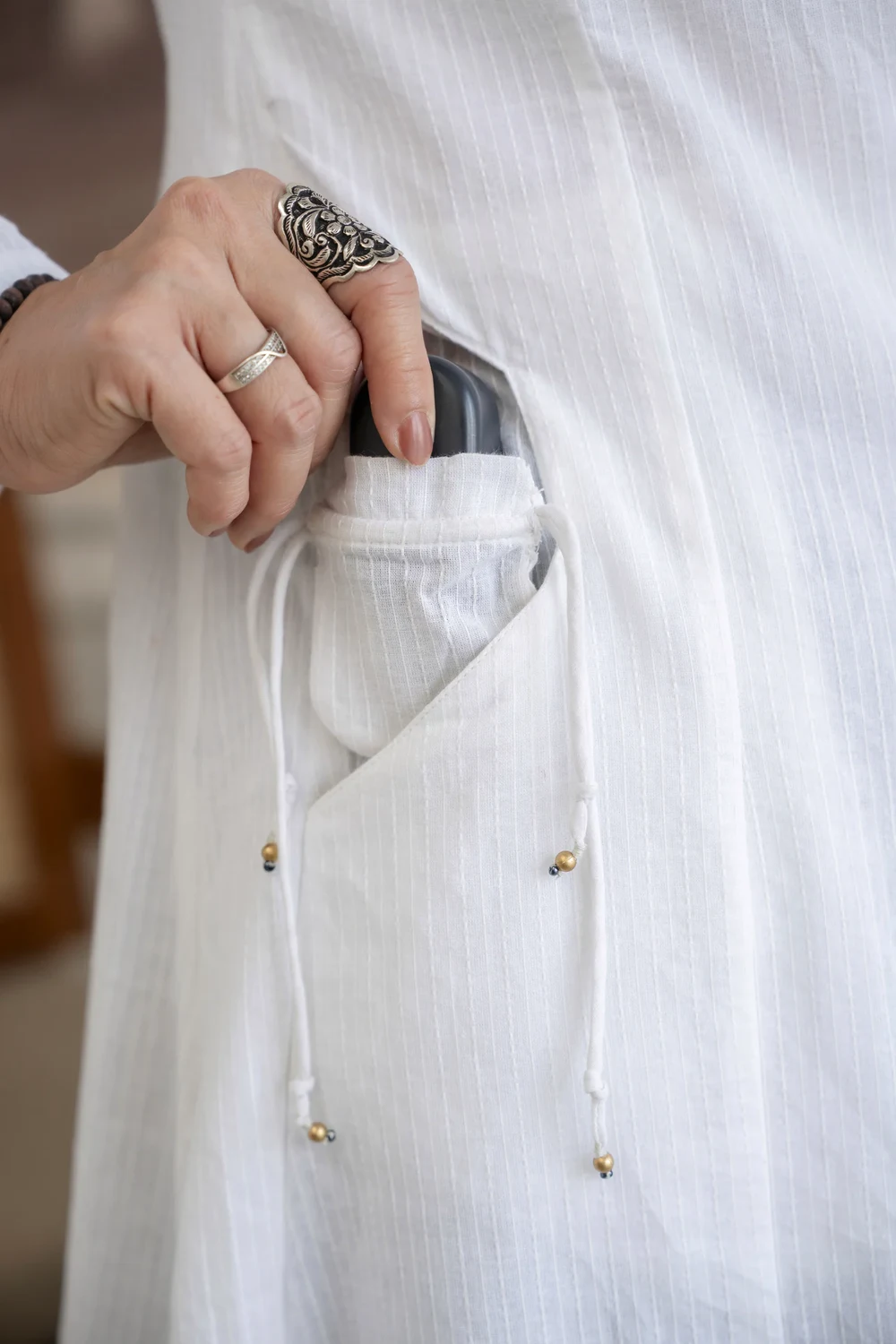
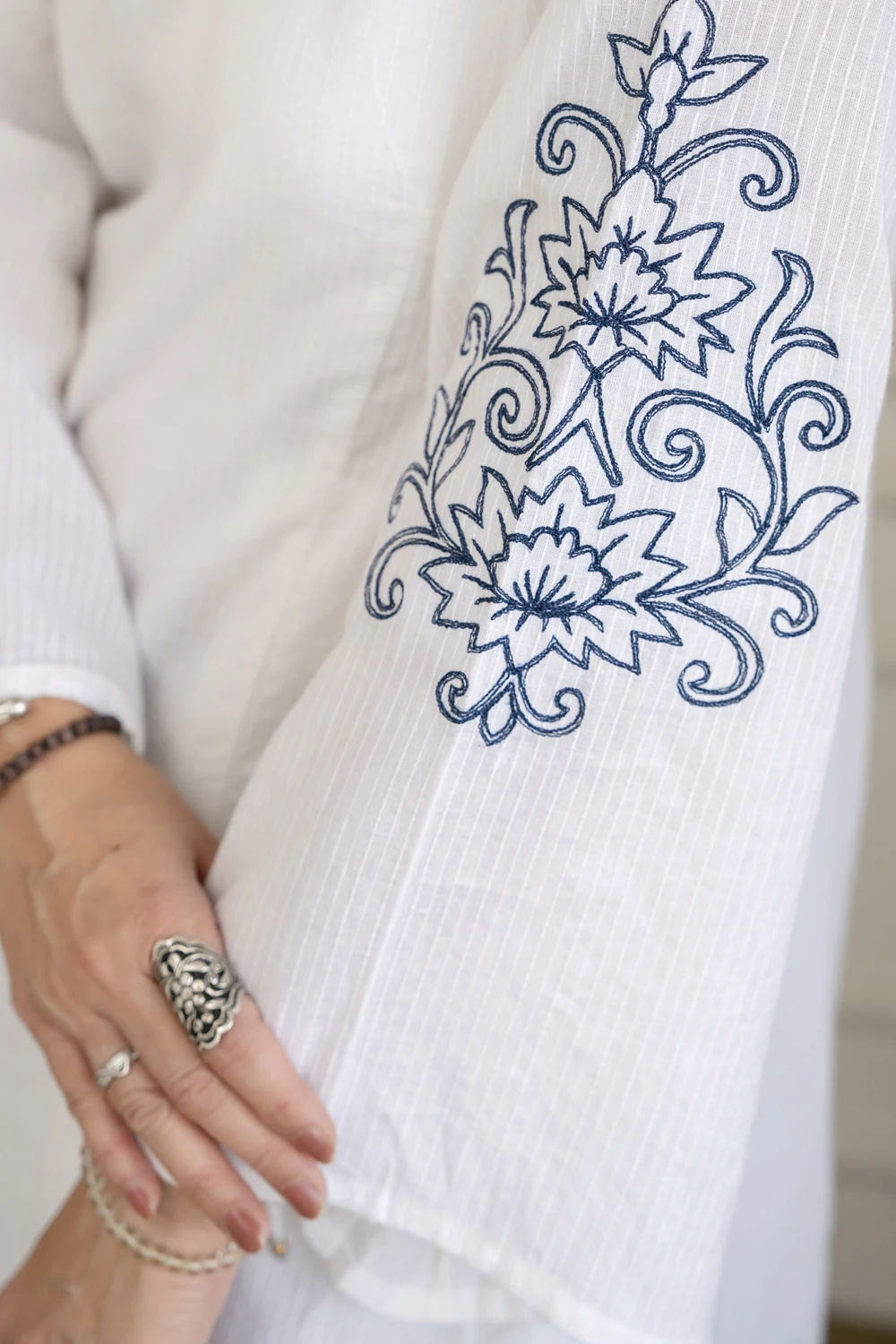
Drawstring potli pocket with gold bead tassels on a cotton kurta Indigo hand embroidery on textured cotton

Renu's love for Indian textiles goes back to her nani. Some of the outfits she wore in college are still in the cupboard — and her daughter, Arshia Vempati, wears them now. Two generations, forty-odd years, and the cloth has outlasted every trend in between.

That is the case for Indian craft, made better than we could make it. So we work with the weaves and the hands that have always made them:

  • Handloom & Khadi
  • Hand-block printing — Bagru, Bagh
  • Bandhani, Leheriya
  • Lucknowi craftsmanship
  • Chanderi & Maheshwari
  • Dhakai & Jamdani

Somewhere along the way these fabrics got filed under special occasion — pulled out for weddings and festivals, folded away again by Monday. We think they belong in a Tuesday meeting. Our job is to make that feel ordinary rather than ceremonial.

Indian Formalwear, Reimagined

Most working women choose between Western formalwear and a saree. We are building the third option — Indian clothing considered enough for a client meeting, and comfortable enough for the whole day that follows it. It is not a kurta for the office, and it is not occasionwear with the embellishment turned down. It is its own thing.

01

Clothing

Indian ethnic wear, formalwear and workwear built from heritage textiles and contemporary silhouettes — coordinated separates that restyle into several looks instead of one.

And pockets that work. Layered, compartmented, placed where your phone, cards, earphones and keys actually go. You should be able to walk to the coffee machine without carrying a clutch.

See the collection →
02

Real Silver Jewellery

Genuine silver, with the weight of every piece listed in grams. Because the silver rate moves, we don't print a price that goes stale — message us and we'll confirm the day's rate, making charges and final cost before you order.

Coming soon.

03

Functional Accessories

Starting with a hybrid work bag that sits between a laptop sleeve and a tote: protected laptop storage, organised compartments, tidy cable routing, and an opening that lets a power bank inside charge the phone in your hand.

Coming soon.

Prarambh — The Vaijyanti Collection

Prarambh means a beginning; Vaijyanti carries the sense of victory. Together: that a new beginning leads somewhere good. The name is also a thank-you — Vaijyanti is the friend who pushed Renu to stop talking about designing and start doing it.

Chanderi and Tussar silk, hand embroidery — thread, mukaish, badla, patra, pita, mirror — and the quiet elegance of a Jamdani dupatta. Minimalist in spirit, so the cloth and the craftsmanship do the talking.

The Corporate Edit

Everyday professional life, in white and indigo. Blue Bagru and other Indian hand-block prints on white — fresh, grounded, unmistakably Indian without announcing itself.

Designed as a capsule: coordinated colours and complementary prints so a few pieces become many outfits. Trousers with a kurta through the day; swap the kurta for a waistcoat and the look changes entirely. A summer edit is already on the table.

A Women-Led Business, On Purpose

Renu is a single mother. She knows exactly what it costs to hold down work, money and a child at the same time, and she would like fewer women to have to choose between them.

As The Desi Curve grows, the aim is to create real employment for women — particularly single mothers and women from underserved communities — in a workplace built around how their lives actually run:

  • A four-day working week
  • Seven-hour working days
  • Schedules judged on what gets done, not on clock-in times
  • Children welcome at work
  • Pets welcome where we can manage it
  • Motherhood treated as part of a life, not a limit on a career

These are commitments we're working towards, not claims we've already earned. Right now The Desi Curve is Renu, her daughter Arshia, and a handful of friends who believed in it early. Every order moves it a little closer.

Shop The Collection
Added to your bag
Chat with us